
Guide
Heat Pump Guide
How it works, costs & subsidies – everything you need to know about heat pumps.
 KI-generiert
What Types of Heat Pumps Are There?
Depending on your building, property and budget, different heat pump types may be suitable. All use the same principle: ambient heat is raised to a higher temperature level – for heating or hot water.
Air-to-Water Heat Pump
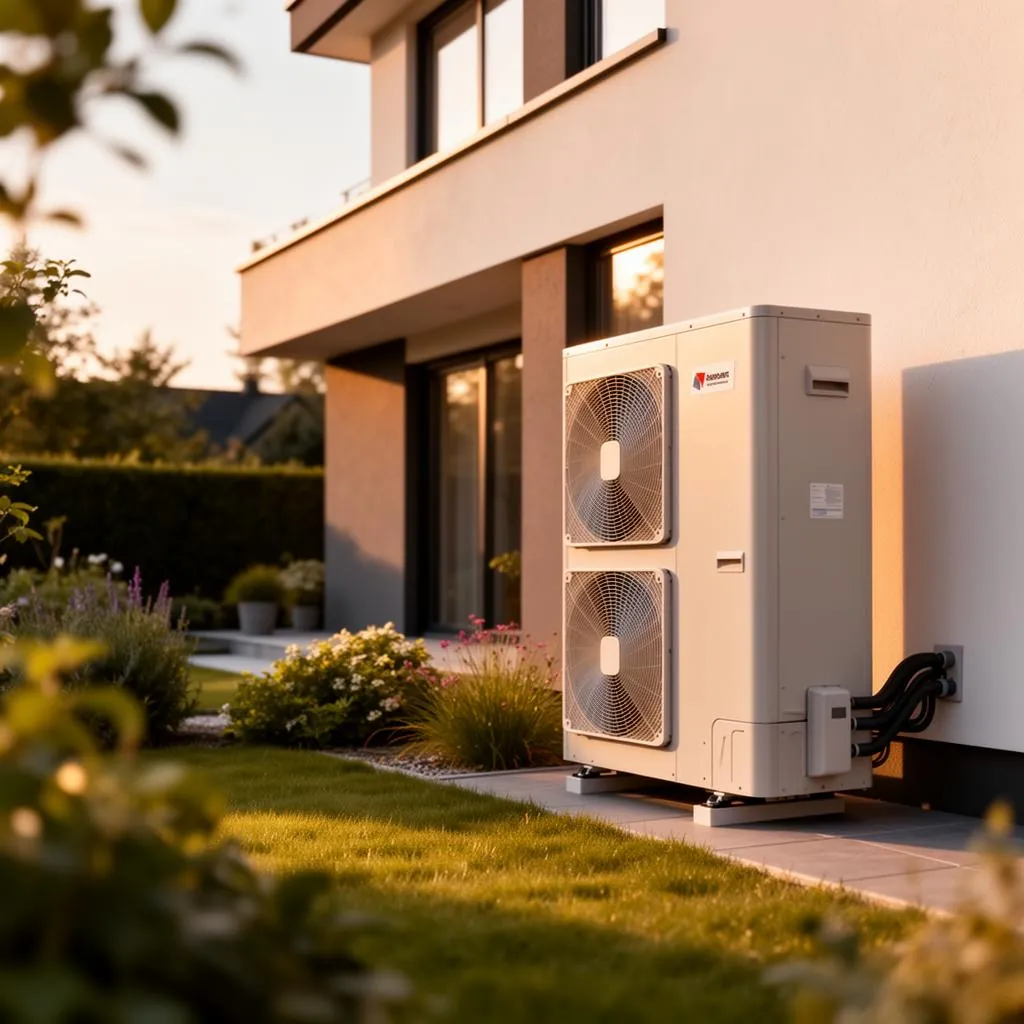
The most common type: Extracts heat from outdoor air and transfers it to the heating system. Easy to install and suitable for most buildings.
Ground-Source Heat Pump
Draws heat from the ground – via collectors in the garden or probes up to 100 m deep. Particularly consistent and efficient, even at low temperatures.
Water-to-Water Heat Pump
Uses the constant temperature of groundwater as a heat source. Very high efficiency, but requires a suitable well and water rights permit.
Air-to-Air Heat Pump
Works like a split AC in heating mode: Warms room air directly, without water as a heat carrier. Ideal as a supplement or for well-insulated buildings.
Modern heat pumps achieve seasonal performance factors (SPF) of 3–5 – 1 kWh of electricity produces 3–5 kWh of heat.
What Does a Heat Pump Cost?
The investment depends on many individual factors. The following criteria influence the price:
- Type of heat pump (air-source, ground-source, water-source)
- Heating load and heat demand of the building
- Building condition (old building, new build, insulation, heating surfaces)
- Development effort (e.g. drilling, wells, ground collectors)
- Manufacturer, output and energy efficiency
- Integration with existing heating systems and hot water
- Additional features (cooling, smart home control, buffer tank)
Since every project is different, we create an individual offer tailored exactly to your building and needs. Through subsidies (BAFA, KfW), costs can be reduced by up to 70%.
Operating Costs & Efficiency
Heat pumps are among the most efficient heating systems.
- Annual electricity costs: approx. €800 – €1,500 (single-family home)
- Significantly cheaper than oil or gas heating
- Combination with photovoltaics further reduces costs
- Can also be used for cooling in summer (reversible heat pump)
Those using their own PV electricity heat almost for free.
Subsidies & Grants
Heat pumps are subsidized by the government – especially when replacing old heating systems.
- BAFA: up to 70% subsidy possible
- KfW: low-interest loans and grants
- Additional bonuses when replacing fossil heating
- Subsidy application must be submitted before construction begins
We are happy to advise you on current funding options.
Get Advice Now
Interested in a heat pump? We advise you individually and transparently on technology, costs and subsidies.
Request a free consultationYou might also be interested in
Stuttgart Climate
Stuttgart is one of the hottest cities in Germany. Find out why air conditioning is especially useful here.
Learn moreAC Guide
What does an air conditioner cost? Which one is right for me? Everything about costs, efficiency and subsidies.
Learn moreF-Gas Regulation
The new EU regulation affects refrigerants in air conditioning and heat pump systems. Find out what this means for you.
Learn more